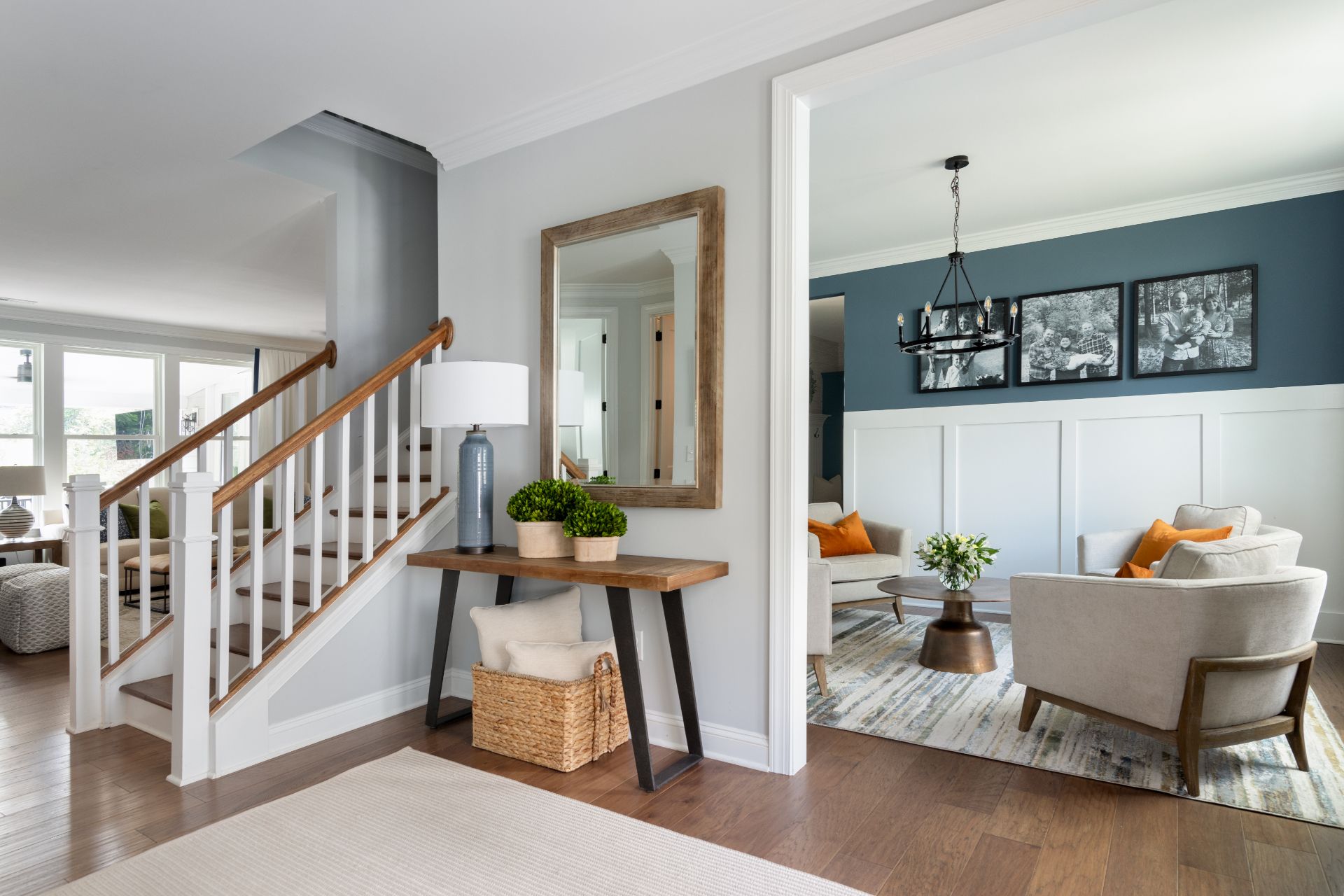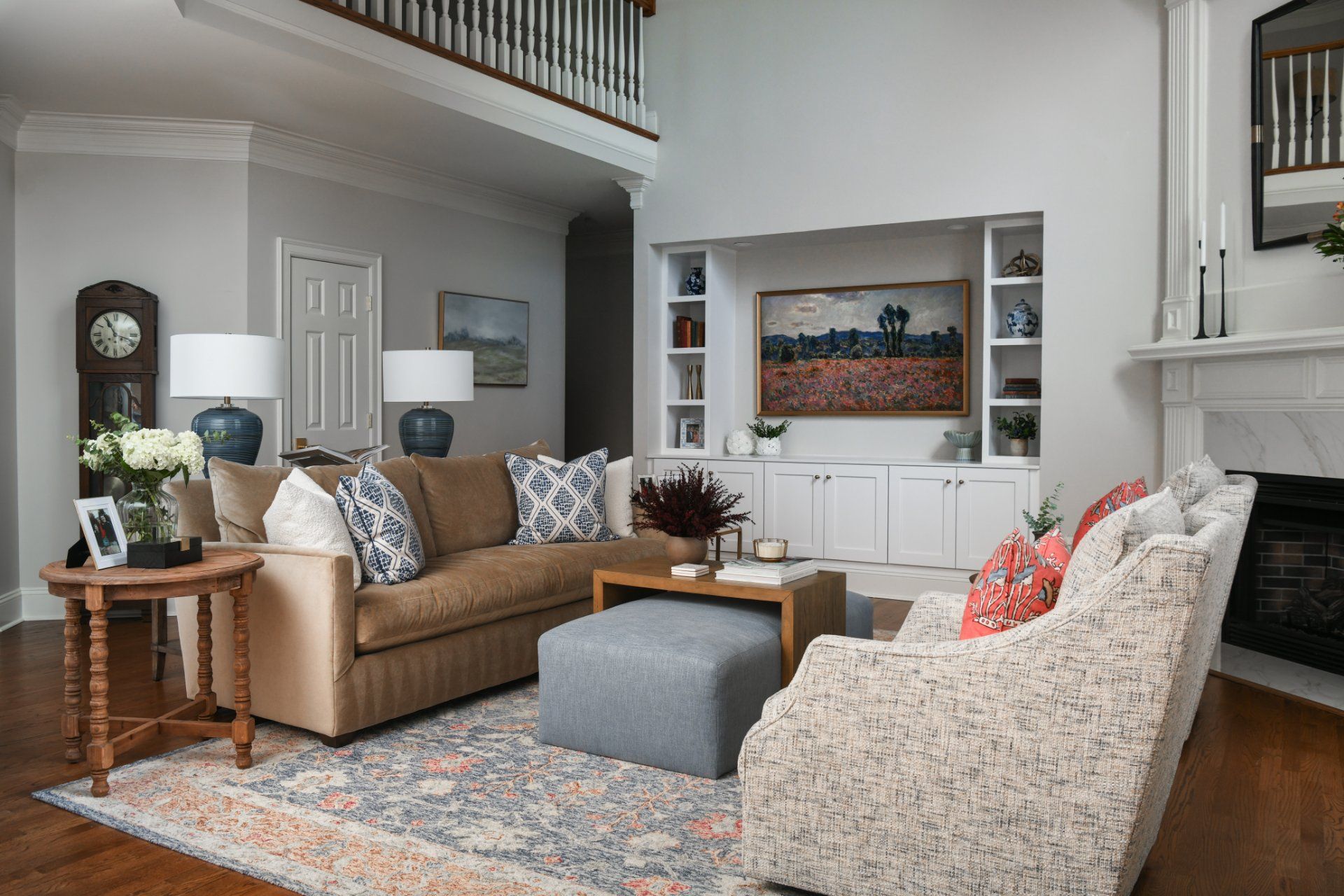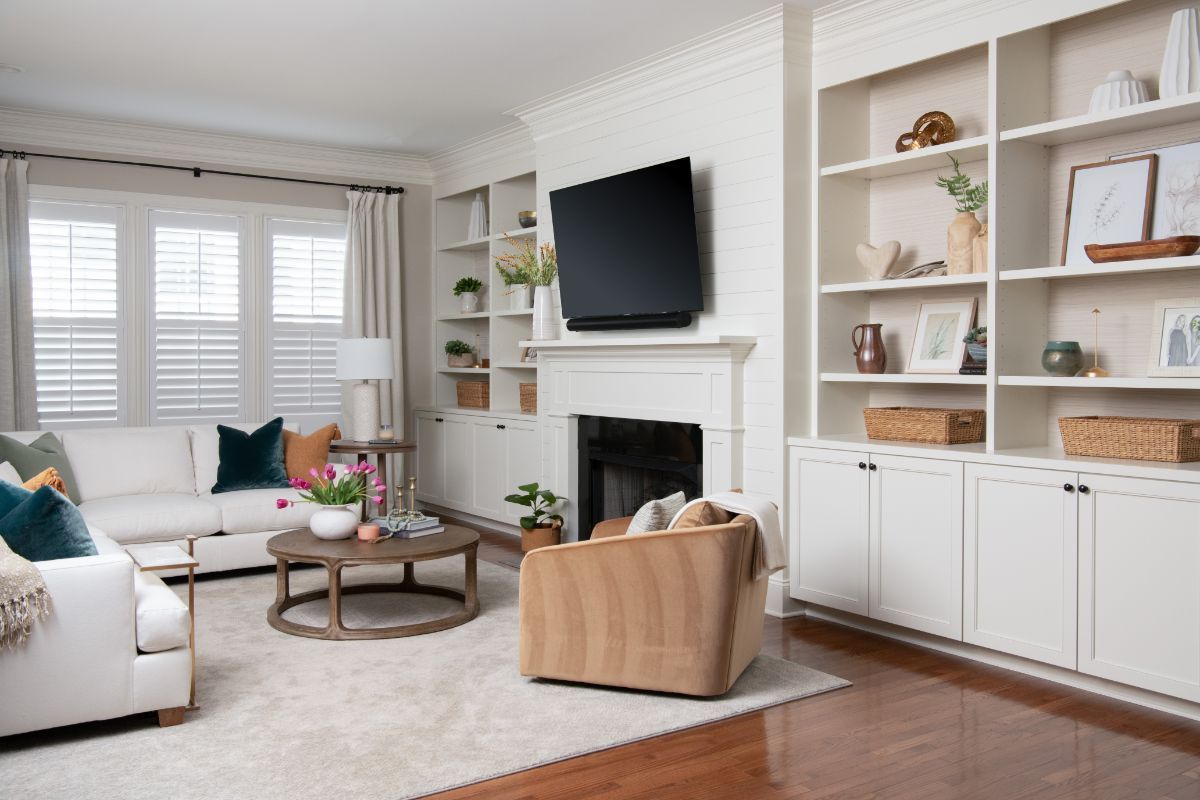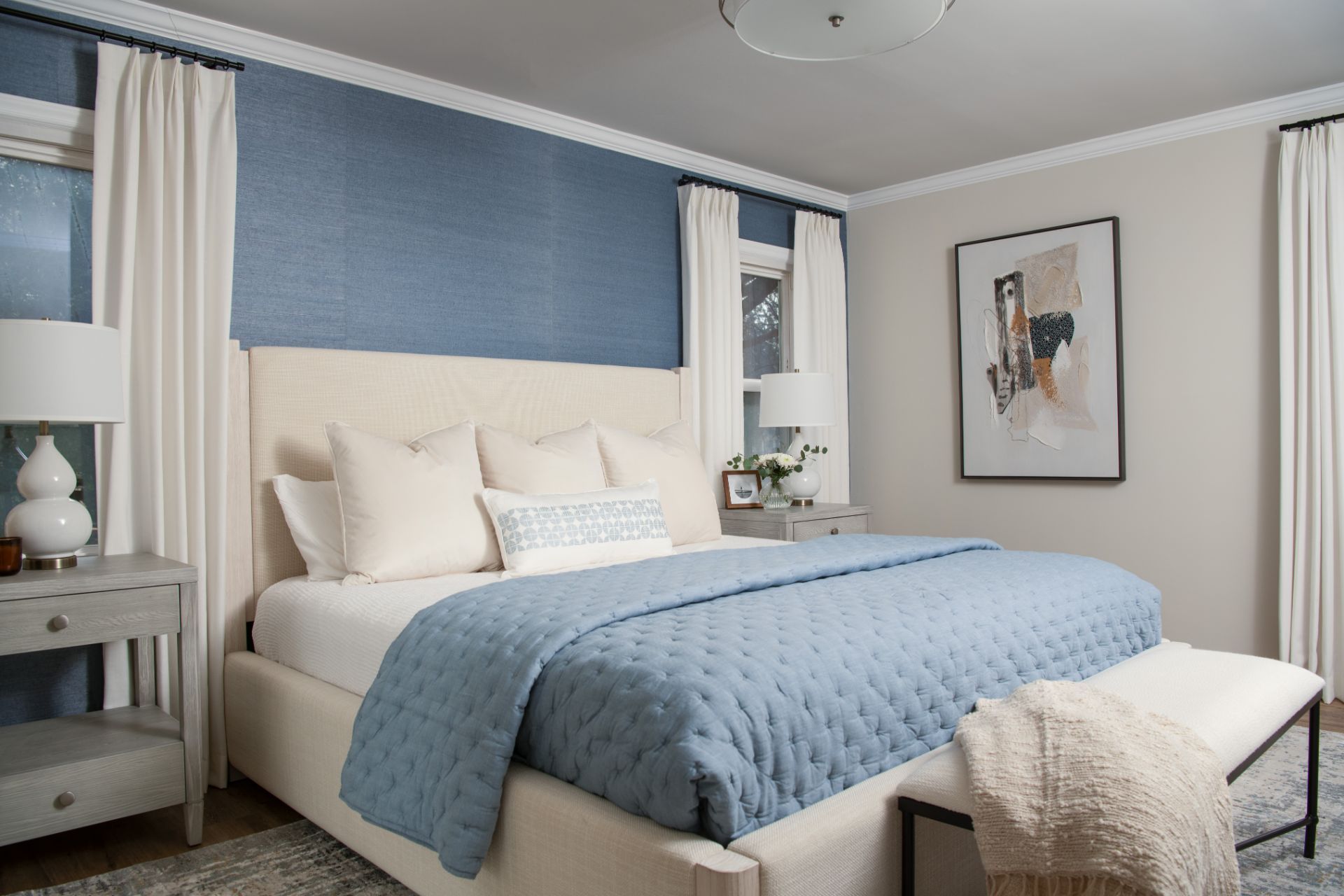
There’s nothing better than walking through the door and feeling completely at home, where every room feels cozy, welcoming, and reflects your personality and the way you live.
Usually, this feeling doesn’t come from adding the ultimate trend to your rooms or adding a new piece of furniture. It’s all about making the right choices for your home; in other words, what your home needs.
In every home we visit, we notice five elements that make a bigger difference than you might think. These elements transform any home from builder-grade to a space you love.
5 Design Elements That Can Completely
Transform Your Home
A key part of our design process is asking clients for inspiration pictures. These can help us envision their goals for that specific space. These pictures are usually beautifully designed, balanced, and aesthetically pleasing. When we compare the pictures to the real space, we notice five missing elements that truly make a difference.
In our experience, most homes are missing these extra touches:
- Lighting That Does More Than Light A Room
- Personality
- Art That’s The Right Scale
- A Properly Sized Rug
- Furniture That Doesn’t Feel Aligned
Let’s dive deeper into each of these elements, and make sure to read until the end for an exclusive design tip on each one.
1. Lighting That Does More Than Light a Room
Lighting is one of the first things I notice when I walk into a home. Many of the spaces we visit still have the original builder-grade fixtures, which have nothing wrong with them; they just don’t give you that elevated, personalized look you see in your inspiration photos. In our experience, the way to elevate a home is through lighting layers.
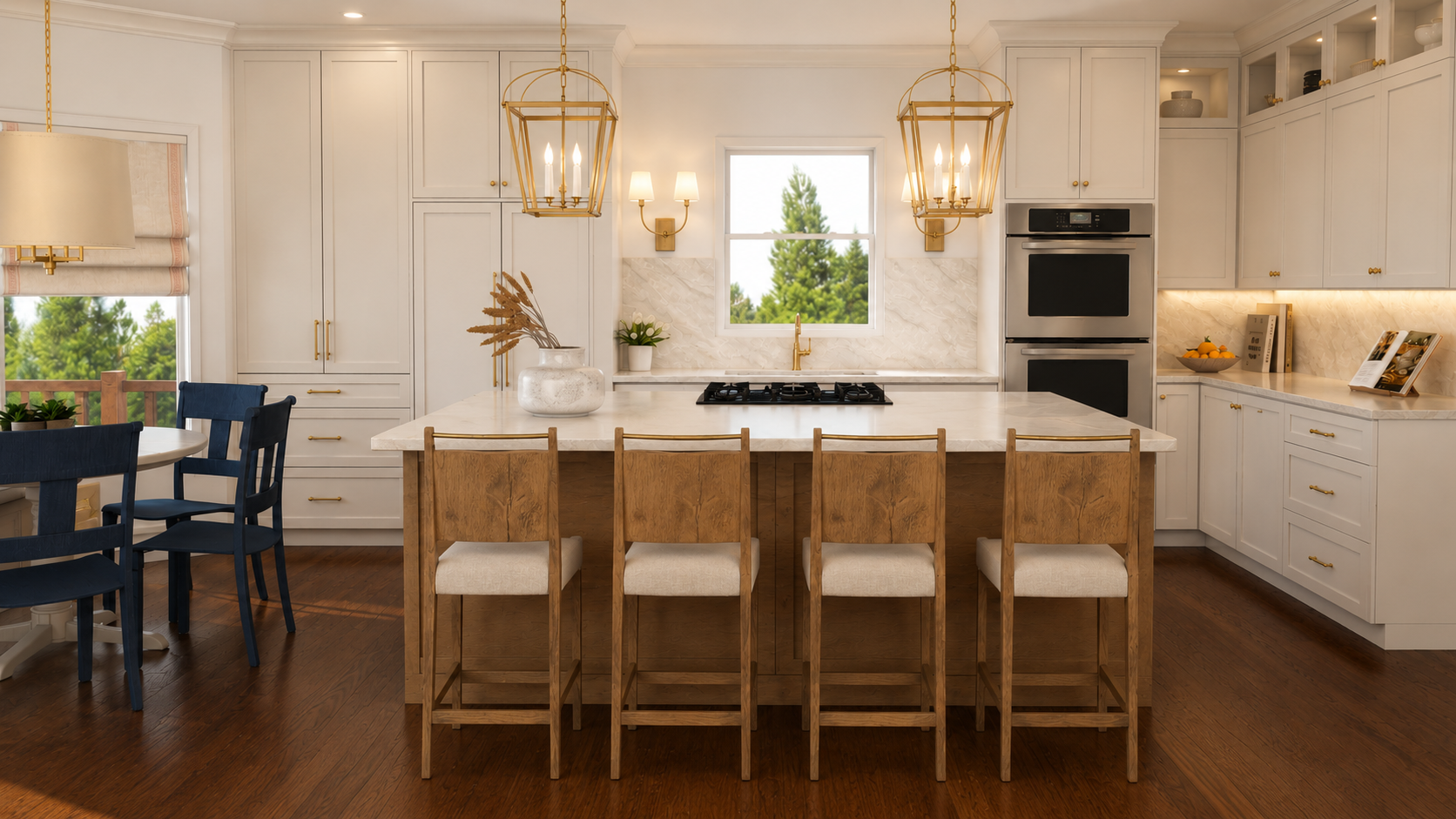
Layered lighting creates a wow effect in a home. For example, changing a dining room chandelier or adding beautiful pendants can completely change a room's personality.
Layered lighting refers to overhead (anything on the ceiling), accent (sconces or lamps), and task (pendants, under-cabinet lighting). It also depends on the room.
A great example of layered lighting is this home office; look at how we incorporated this concept, added functionality, and achieved the proper balance to elevate it.
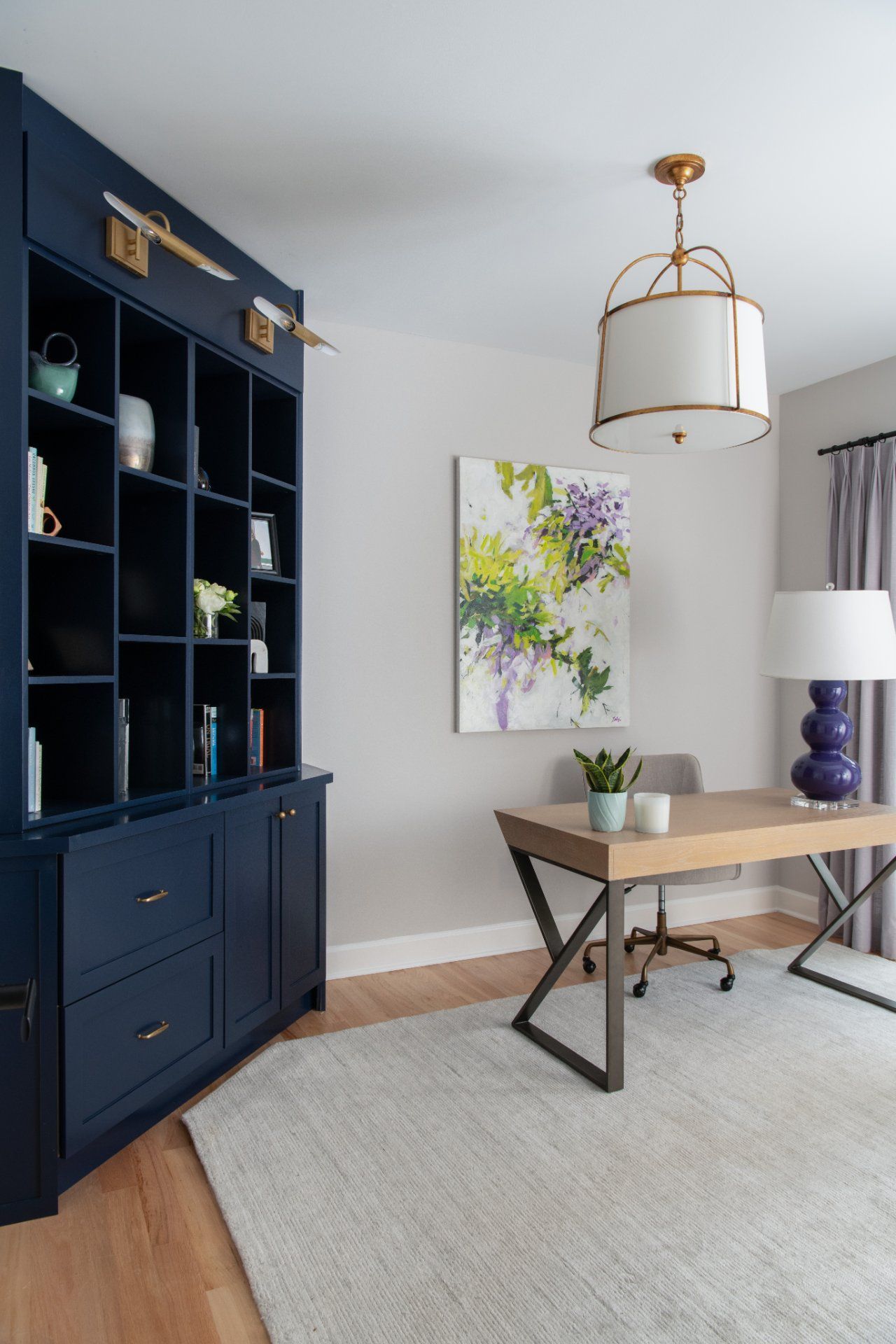
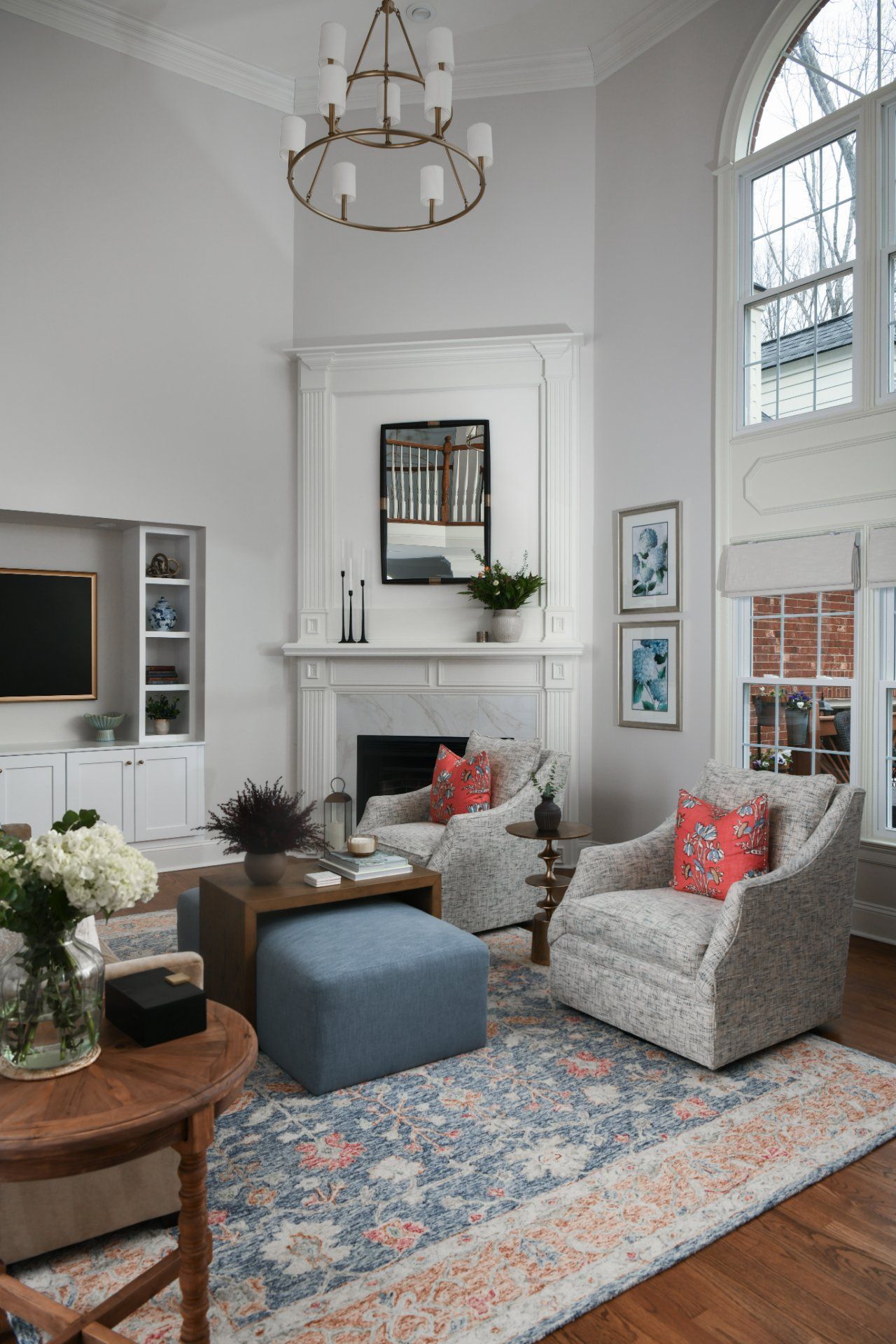
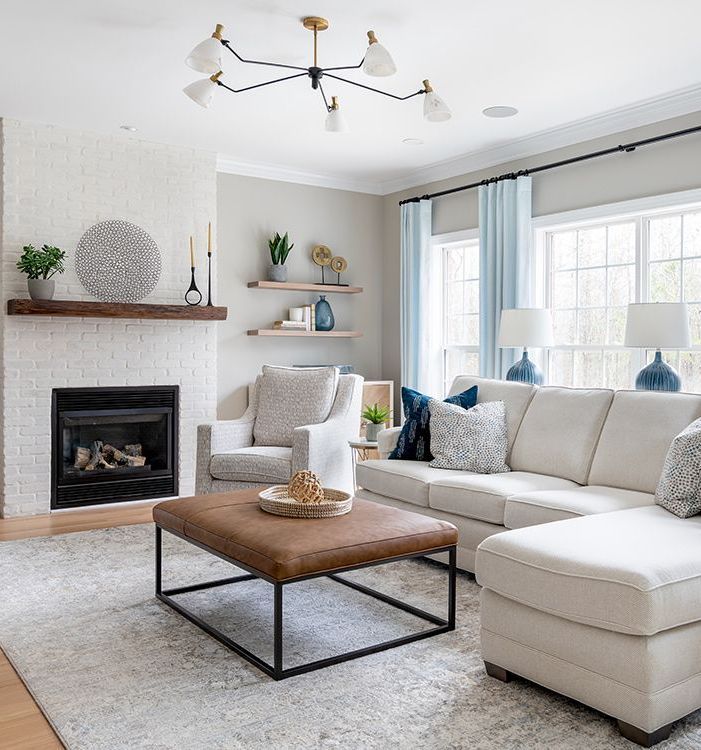
Another thing we notice in family rooms is a lack of accent lighting. If the only light comes from the ceiling, the room can feel flat and a little cold.
A great tip we always recommend is adding table lamps, floor lamps, or sconces. Different lights create layers, and those layers make a room feel warm and inviting at any time of day.
Here’s a designer tip nobody is sharing with you: If you’re trying to make your home feel more finished without changing everything, lighting is a great place to start.
2. Personality
One thing you will not see in a design inspiration picture is builder beige or gray walls. In most of these rooms, there’s some sort of personality to the room. And by personality we refer to:
- Accent walls
- Paint
- Art
- Moldings
- Or any built-in units
Your walls are an opportunity to add personality to a room. You can try adding paint color, wallpaper, or wall treatments. The key is to choose what makes the room feel balanced.
Take, for example, our bathroom from
Project Modern Fairway Views, which was recently featured in Houzz. We added geometric wallpaper to make a statement and create a dramatic vibe in this small yet mighty space.
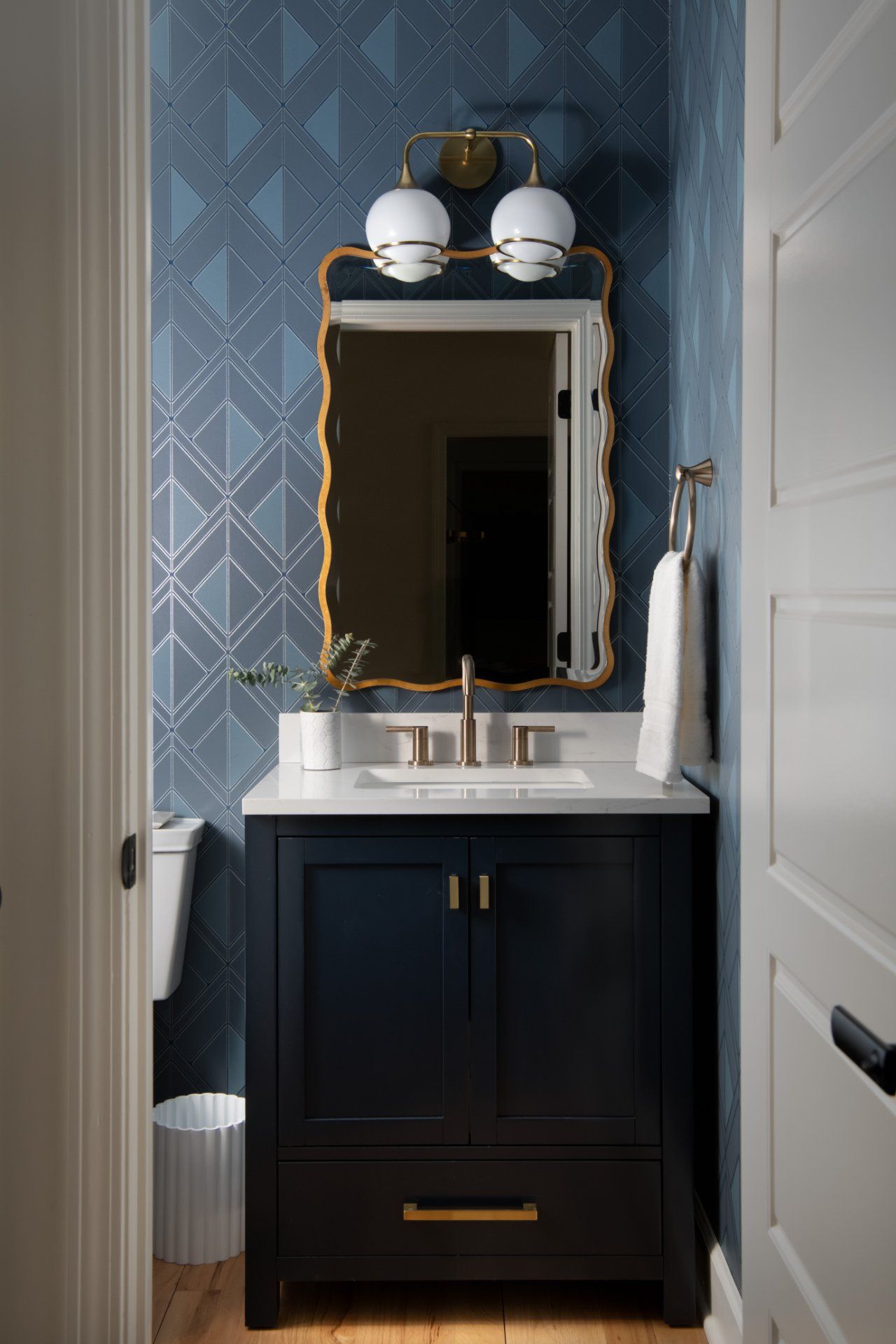
If you’ve added furniture but your room still feels unfinished, look at the walls. They may be what’s missing to elevate your space.
3. Art That’s the Right Scale
Another thing to consider for those blank walls is art. This is a great way to bring personality to your room. On the other hand, we also see art pieces that are too small for a specific space.
A small art piece on a large wall won’t have the same impact as a thoughtfully sized piece or a group that balances the elements around it.
The same principle applies to accessories and decor. Rather than filling a built-in or bookshelf with lots of little things, I often prefer fewer, larger pieces with different heights, materials, and textures. Especially pieces that tell a story about our clients.
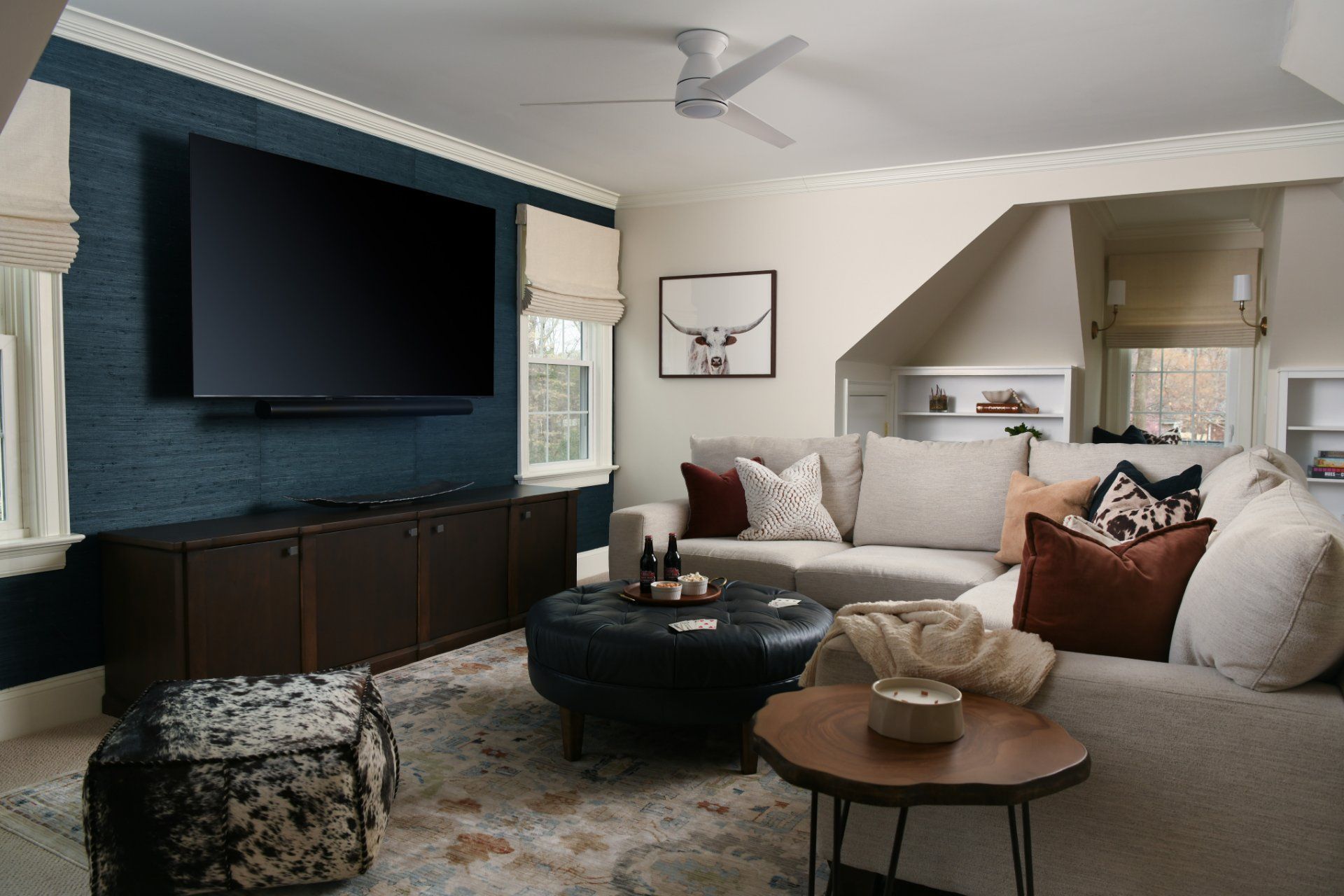
For example, in our
Project Room for Everyone, we saw an opportunity to add a special touch in the bonus room. Our clients are from Texas, and they moved to North Carolina. We sourced a longhorn picture to remind them of their home state.
4. A Properly Sized Rug
One of the things we always see in a home is undersized rugs. You might have a beautiful sofa, chairs, or coffee table, but if they’re sitting around a rug that’s too small, the entire room can feel disconnected.
A properly sized rug helps anchor the furniture and create a cohesive look. It can make a room feel larger and more visually appealing.
The same goes for other pieces in the room. For example, a coffee table that’s too small for your furniture pieces can throw off the balance even if the table itself is beautiful.
Before replacing a piece because you don’t like the style, check the scale. Sometimes that’s the real problem.
5. Mis-aligned Furniture
Furniture is one of the most important pieces. Not only is it a big investment, but it takes up most of the space in a room.
Sometimes we see furniture pieces- a dining table with its matching chairs, or several pieces purchased together because it seemed like the easiest way to make everything coordinate.
Here’s the thing: If you’re trying to achieve that layered, designer look, everything doesn’t need to match. In fact, it probably shouldn’t.
A room becomes much more interesting when the pieces coordinate without being identical.
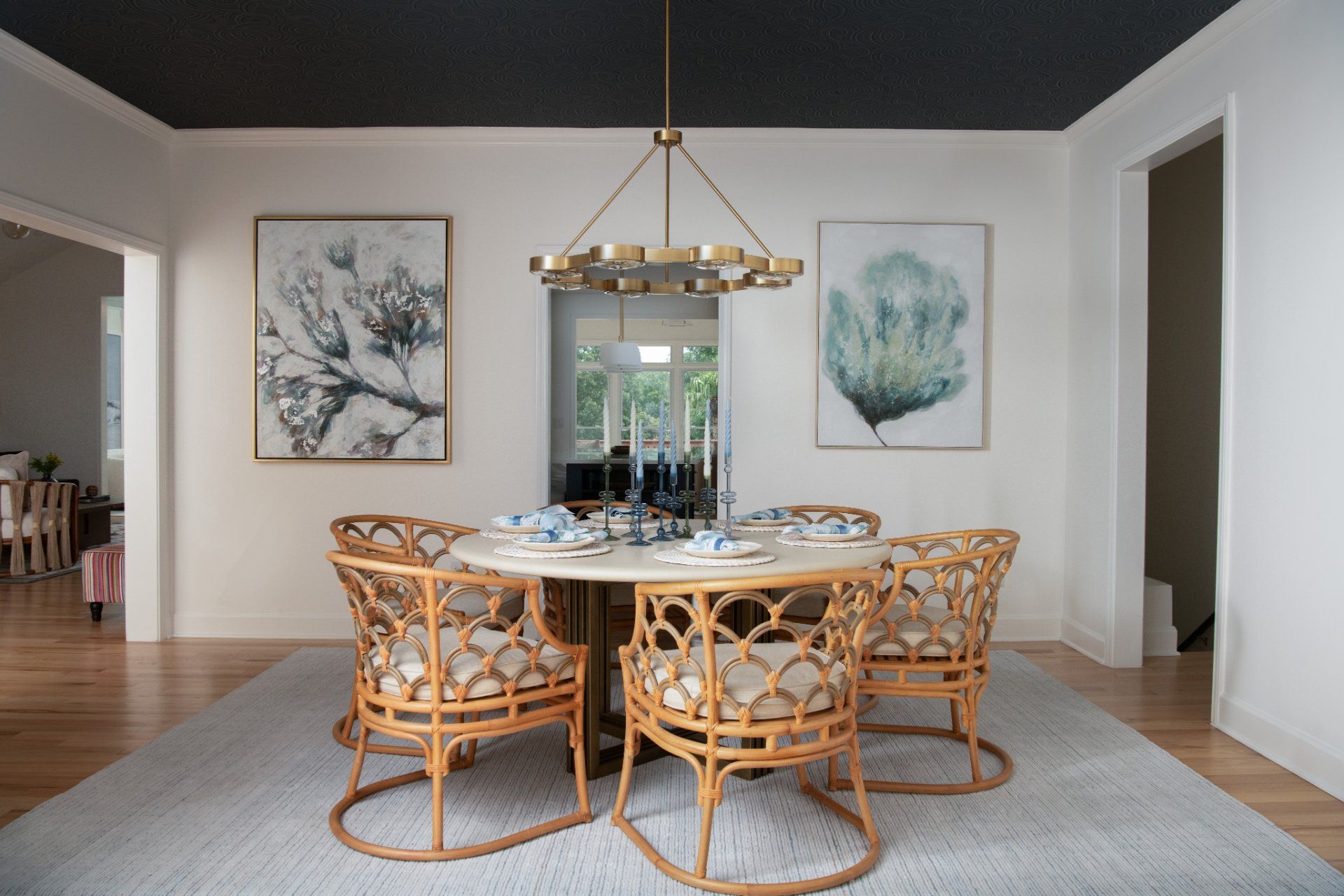
Take a look at this dining room we did for
Project Modern Coastal Abode, where we chose a robust, durable wood table, paired with performance-fabric chair cushions. We chose a navy frame for the chairs that adds contrast to the table.
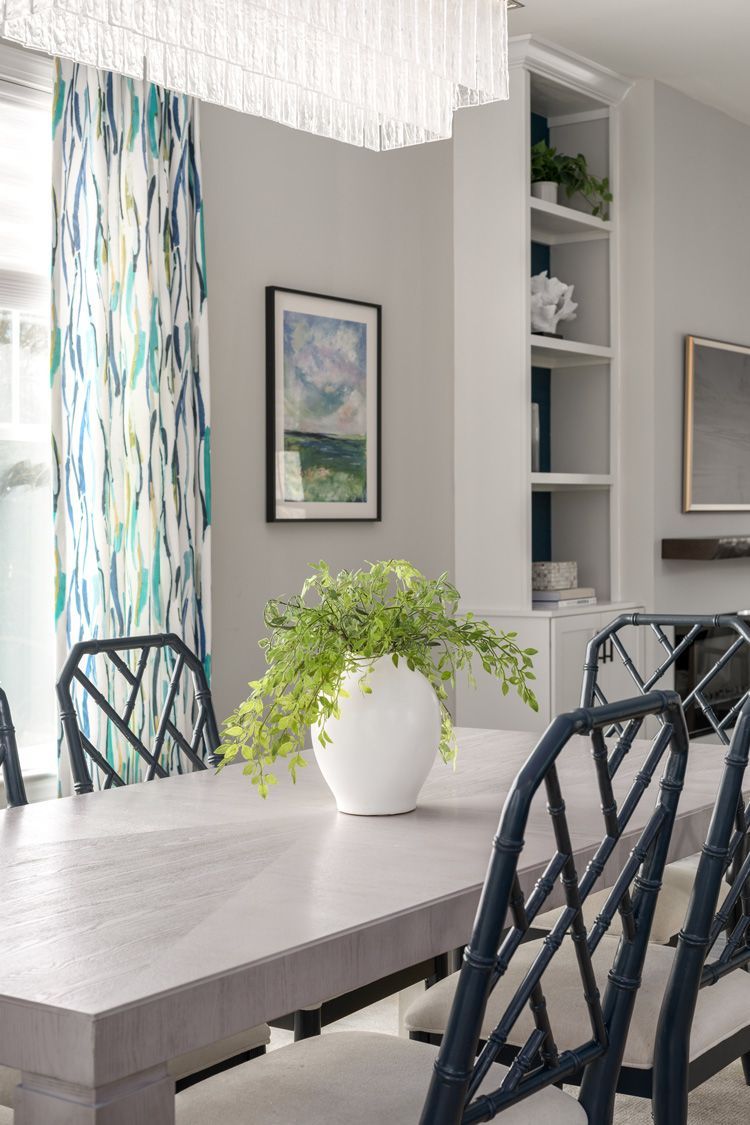
On the other side, we also see rooms filled with lots of smaller pieces and accessories that don’t really relate to one another. Instead of making the room feel complete, they can make it feel cluttered.
Our rule is simple: use fewer, key pieces that balance the room.
The same goes for window treatments. Off-the-shelf drapes are better than nothing, but they’re often too narrow or not the right size for larger windows. Custom window treatments let us get the scale, fabric, and details right, which makes all the difference.
The First Step? Having a Plan.
After reading all of these design tips, you’re probably thinking that none of these seems complicated. They’re not. The tricky part is figuring out how they all work together.
That’s usually what separates an inspiration photo from a room that still feels like it’s missing something. Instead of buying another small accessory because a corner feels empty, take a look at the room and ask yourself:
- Is your rug large enough?
- Is your furniture the right scale?
- Do you have lighting layers?
- Do the walls have personality?
- Does everything feel balanced or put together over time?
Here’s what you may figure out: You don’t need more things. You just need the proper guidance and intention. And that’s when working with a designer can make a difference. We love helping you develop the right solution for your space.
So, if you don’t know where to start or what to do to make your space feel homey, reach out today so we can help you turn those inspiration pictures into a plan that becomes reality.
Save this article for later by pinning it here!
What’s your design style?
Find out what kind of interior design best suits your inner self. From Transitional to Modern, it's time to make your home a place you’ll love!
You can opt-out at any time. Please note we do not share your information with anyone.

I work with busy families to create beautiful and functional spaces by providing local design services in the Charlotte/Waxhaw area and beyond through online design.

What’s your design style?
Find out what kind of interior design best suits your inner self. From Transitional to Modern, it's time to make your home a place you’ll love!
You can opt-out at any time. Please note we do not share your information with anyone.

Recent Posts